
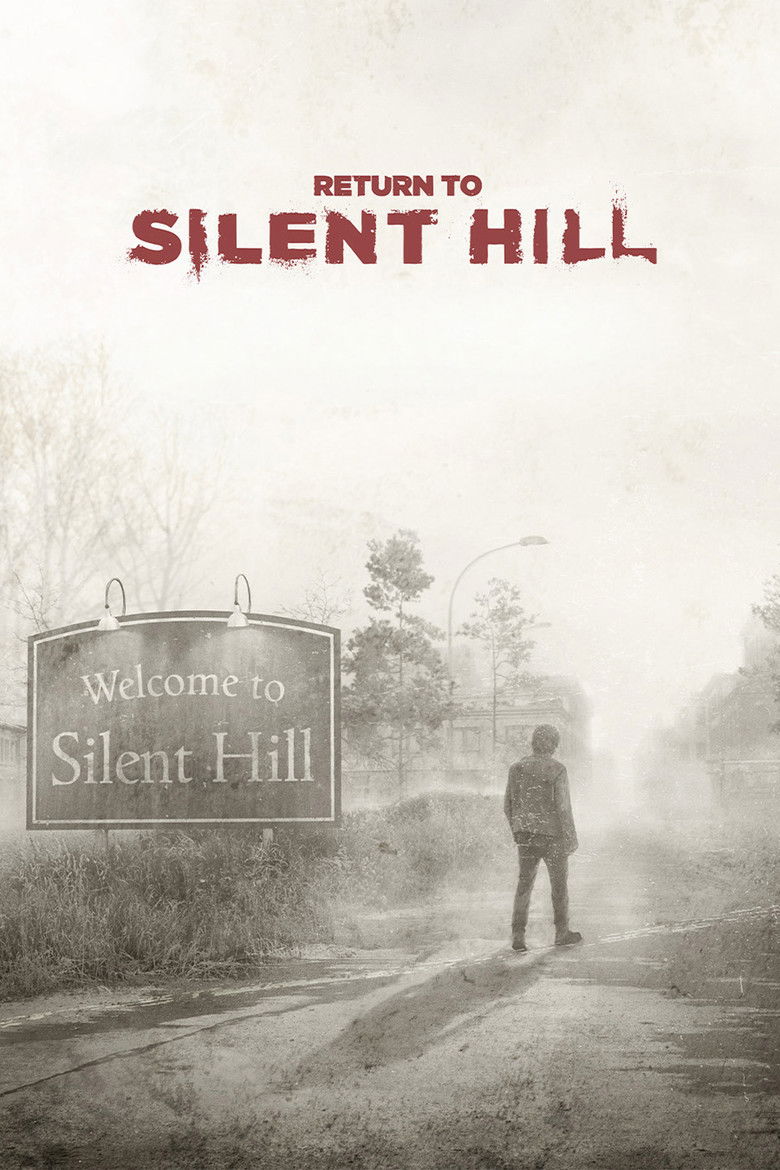
Director: Christophe Gans Screenplay: Christophe Gans, Sandra Vo-Anh and William Josef Schneider Cast: Jeremy Irvine, Hannah Emily Anderson, Evie Templeton, Robert Strange, Pearse Egan Year: 2026
Let me declare my conflict of interest up front: I'm a fan of the Silent Hill games and especially of their mythology. That can make me harder or softer on this film, and you should know it while reading me. With that said, the problem with "Return to Silent Hill" isn't that it changes things. It's that it changes precisely the things that made Silent Hill 2 Silent Hill 2.
In "Return to Silent Hill" we follow James Sunderland (Jeremy Irvine), who receives a letter from his wife Mary, dead for months, and returns to the town where they were happy to look for her. That's the opening of the 2001 game, and the film honours it. Christophe Gans directs, the same man behind the 2006 Silent Hill, a film I liked a good deal and that critics treated unfairly, which makes what happens here hurt more.
The best thing about the film is the look. The town looks like the game, the ash falls like the game, and there are compositions a player recognises instantly. Somebody clearly studied the source material with affection, and what ruins a lot of that work is the CGI, used far too often and almost never convincing, and the uncomfortable comparison there isn't with Gans's first film but with the franchise's second, which was pretty bad. The performances don't help either, uniformly weak, with makeup and costume choices that throw you out of the film completely. A wig that reads as a wig, a false beard that reads as false. Small things, but they accumulate until it's hard to take what you're watching seriously.
The real damage is elsewhere, since Silent Hill 2 wasn't a monster story, it was a system of symbols in which every creature meant something about James, and much of that meaning was sexual: repressed desire, guilt over feeling it, resentment toward an illness that took his intimacy with his wife. This film swaps the mannequins for new creatures, and that takes the whole layer with it. Pyramid Head shows up two or three times and what he represents is never resolved, when in the game he was the mechanism through which James punished himself. Angela and Eddie are present so fans can recognise them and applaud, their stories left undeveloped, though credit where it's due: Angela's sexual abuse is touched on, very subtly, in a few seconds that let you know what's happening.
And then there's the decision I find unforgivable, the one where the film fuses Mary, Angela and Maria into a single figure played by Hannah Emily Anderson, and turns Laura into a child version of Maria, so that four separate characters end up being the same one. It also adds the notion that Mary belonged to a cult, which appears nowhere in the game. Each of those characters existed to reflect a different face of James's guilt. Collapsing them into one doesn't simplify the story, it disarms it. I'm not against an adaptation exploring its own routes, but if you're going to change the symbolism, the atmosphere and the structure, what's left isn't the work you claimed to be adapting.
The games never ran on the quick scare, they ran on atmosphere, on sustained discomfort, and on handling subjects other media flee from. This film takes the easy route, shows the monster and goes for the jump, and the jump doesn't even work. As a horror film it's generic and it isn't frightening. As a Silent Hill adaptation, it plays like it was written by someone who never understood what Silent Hill was about. It opens with promise and from the midpoint falls without brakes.
Set against the other video-game adaptations in the catalogue, it lands below even modest efforts: "Iron Lung" understood that what needed carrying over was the feeling rather than the inventory, and "Mortal Kombat" at least knew exactly what kind of film it wanted to be.
Anyone who has never touched the games and just wants atmospheric small-town fog horror may get a lukewarm time out of the first half. Anyone arriving from the games will watch the things that made this story special taken apart piece by piece. I'm giving it a 2, and I think nostalgia is making me generous.
Rating: 2/10
Ending Explained (Spoilers ahead)
The ending reveals that everything James experiences in the town is the consequence of something he already did. Mary was ill and suffering, she asked him to end her pain, and James killed her out of mercy. That's the same axis as the game, with one change, since here Mary's illness is attributed to the people who had adopted her, where in the game it was cancer, with no culprits and no conspiracy.
With that on the table, the town stops being a place and becomes what it always was in the original fiction, a mechanism that hands James back whatever he's carrying. Mary appears to tell him she forgives him, and the important detail is that on her own terms there's nothing to forgive, because she asked him for it. Her resentment was never the problem; the problem is that James doesn't forgive himself, and can't hold at once that he loves her, that she's gone, and that he's the one who ended her life.
So he kills himself, and what follows presents the two of them again at the moment they met, James moving between disbelief and the happiness of having her back. It looks like a happy ending, and it lasts a moment, since as they leave, the car radio starts pushing static. That static is the franchise's signature, the sign that the town is still working on them and that they're still caught in it. The reunion is another room in the same house.
I'm split on this resolution, given that the game has no single ending, it has several, and one of them is James's suicide, so the fate isn't invented. What doesn't exist on any of those routes is the reunion, and there the film takes a creative liberty that bothers me less than it strikes me as unnecessary. Adding a consolation and removing it ten seconds later with a sound effect is exactly the kind of gesture this adaptation keeps making, recognising the surface of Silent Hill and not trusting what was underneath.
No comments:
Post a Comment