
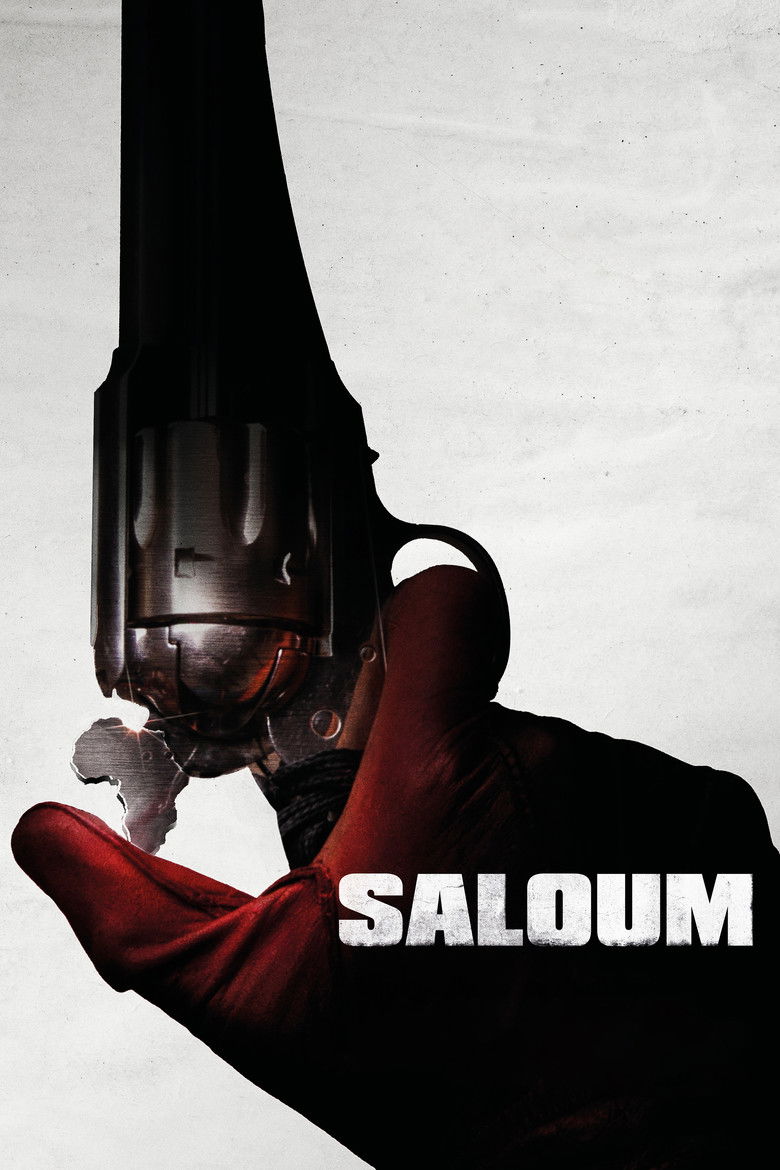
Director: Jean Luc Herbulot Screenplay: Jean Luc Herbulot Cast: Yann Gaël, Roger Felmont Sallah, Mentor Ba, Evelyne Ily Juhen, Bruno Henry Year: 2022
I still don't entirely know how I feel about this film, and that already counts in its favour. Some films resolve themselves while you watch them; others keep working days later, not because they hide a puzzle but because they combine things you aren't used to seeing together. "Saloum" belongs to the second group. Jean Luc Herbulot builds an operations thriller, lets it drift into a western, and ends up releasing spirits in the final stretch, and the strange part is that none of those transitions feels forced.
In "Saloum" we follow a trio of highly efficient mercenaries hired to extract a Mexican drug trafficker and deliver him to Dakar. They complete the job without difficulty, because they're good at what they do and the film takes the trouble to prove it, but the plane they leave on goes down and they make an emergency landing in the Saloum region of Senegal. Looking for materials to repair the aircraft, they reach a small village governed by one simple rule: anyone is welcome as long as they take part in the work. The group accepts and stays. And the place holds considerably more secrets than tools.
Character work is what functions best. There comes a point where you know perfectly well that what this trio does for a living is not defensible, and you grow fond of them anyway and want to know what happens to them. Yann Gaël holds the film's centre with a restraint that serves the character well, and the whole cast works at that level. One production decision deserves separate praise: the film takes place in Africa and is spoken in the languages of the place, with no reach for a convenient translation and no actors imported from elsewhere to widen its audience. That fidelity shows in every scene, and it's part of why the material feels lived rather than researched.
The genre shifts are the most discussed feature, and rightly so. The opening stretch is pure military operation, dry and competent. Then the film settles into something much closer to a western, with the village working as the frontier town where armed outsiders sit down to eat among people who are sizing them up. In the final third the supernatural arrives. The obligatory structural reference is "From Dusk Till Dawn", which made the same move from criminals in flight to supernatural horror, though Herbulot executes it with far less euphoria and considerably more political weight. Across 84 minutes the pacing holds, and the mutations feel like the steps the script needed to get from one point to the next.
Where "Saloum" fails is the horror, and this has to be said plainly because it's what keeps it from being a major film. The spirits aren't developed to the standard of everything around them. How they operate gets explained, but never quite clearly, and they occupy only a portion of the runtime. The material needed more grounding and a considerably darker tone for the threat to carry weight. Worse is the logic: these are supernatural entities that can be beaten with cuts and gunshots, which is to say with things that would harm any human. When the supernatural is solved with bullets, the sub-genre loses precisely what separates it from an action thriller. I liked the ending, but it deserved more explanation and more willingness to unpack what it proposes.
What is genuinely admirable is the use of genre as a vehicle. One of the things I value most in horror is when the sub-genre carries a subject that matters, and Herbulot uses it here to talk about colonisation, slavery and child abuse, and about how a problem that begins as geopolitical becomes a mental-health problem and then spills into violence. That route, from historical damage to individual damage to blood, is the whole film seen from above.
Anyone after African genre cinema with something real to say, and anyone who enjoys films that change shape halfway through, will find something here worth the time. Anyone coming for the horror will leave feeling they arrived late and left early, because the supernatural stretch is the weakest of the three. This is a film I liked a good deal and still can't defend as a complete success, and that tension is honestly part of what keeps me thinking about it.
Rating: 7/10
Ending Explained (Spoilers ahead)
One of the three mercenaries knows the place. He starts saying he has memories of the area, and it's he who steers the group toward the village and insists on staying there. Gradually the suspicion settles that the plane crash wasn't an accident but something premeditated, and that arriving in Saloum was the objective from the start. The reason is that as a child he was enslaved and tortured in that place, and he came back to collect.
He manages it: he kills the man who kept him locked up and abused him. What he doesn't know is that this death breaks the barrier holding a group of spirits at bay. The film later reveals that the murdered man had a pact with those entities, and that the pact was paid in children's lives in exchange for leaving the place in peace. By killing him, the protagonist cuts off the supply and the spirits are loose.
The close comes as the group leaves the village by boat. In the water a manifestation of the man he killed appears, drags him under and drowns him. The reading is direct and fairly bitter: the revenge he chased his whole life is exactly what kills him. Herbulot isn't saying he had no right to collect it. He's saying that collecting it gave him nothing back. The character spent his entire life waiting for that moment and, when it finally arrives, the weight of the hatred and resentment is still sitting on him untouched. Revenge doesn't heal the damage, and here it finishes carrying it out.
That is also where the ending falls short. The mechanics of the pact, the reach of the spirits and the exact meaning of that final apparition are suggested rather than worked through, and a film that gave its first act so much care deserved to close with the same precision.
No comments:
Post a Comment