
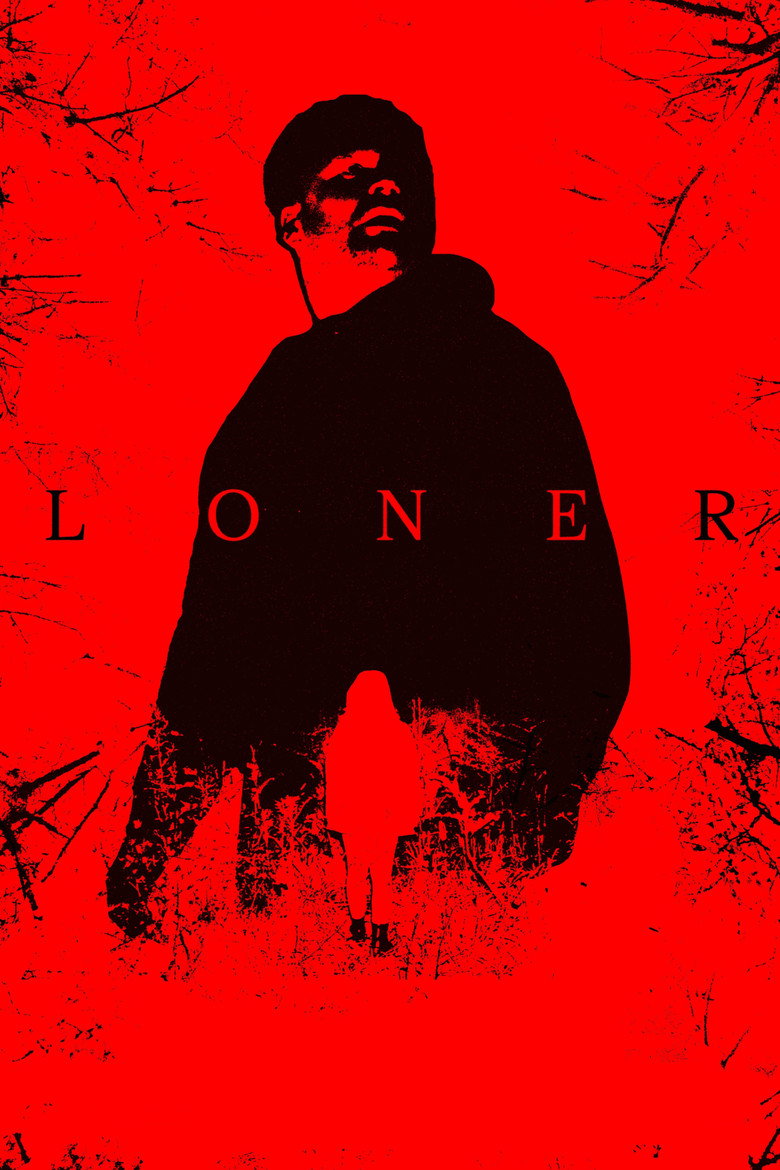
Director: Charlie Robb and Douglas Tawn Screenplay: Charlie Robb Cast: Charlie Robb, Kat Johns-Burke, Douglas Tawn Year: 2026
Slow burn has become a convenient label. It defends almost any slow film, because you can always say the viewer who couldn't sit through it simply lacked patience. But a real slow burn is a contract: the film asks for credit up front and undertakes to pay it back. "Loner" asks for the credit and never pays. It isn't a slow fire. It's a fire that never catches.
In "Loner" we follow Angus Mattock (Charlie Robb), an aspiring vlogger who decides to leave civilisation behind and spend a stretch alone in a forest. He's after two things at once: peace of mind, and material for the channel that's supposed to make him famous. He films everything, which is where the format comes from, and early on the film makes clear there's something else out there besides him.
The found footage is the best thing here, and it works by subtraction. Robb and Tawn avoid the shaky camera that became the sub-genre's tic, building most of the runtime out of static setups and saving movement for specific moments instead of running on it. The forest is also visibly a real forest rather than a set, and that texture does more for the atmosphere than any effect this production could have afforded. The introduction of the character and his surroundings works: you know where you are and who you're with.
The trouble is everything after that introduction. The film runs 99 minutes and you could cut half without losing a single idea. Whole stretches exist only to fill time, and the character can't carry them. Angus is the most interesting thing in the script by design: not a man you hate on sight, but not one you fully empathise with either, and that middle ground is difficult and rarely attempted. But an ambiguous character needs things to happen around him to reveal himself, and here nothing does. The performances aren't the problem. They're fine, neither bad nor memorable.
Where "Loner" genuinely fails is the script, and it fails through indecision. On one side it sets up a mental-health thread. On the other it introduces folk horror elements it never develops, there so the film can call itself horror. Strip them out and no horror remains, at most some suspense. The two lines don't contradict each other productively, they just get in each other's way: every time the film edges toward the supernatural it hints the real subject is psychological decline, and every time it edges toward decline it leaves things hanging that only work if the supernatural is literal. Ambiguity can be a tool, and here it looks intended, a way of rendering Angus's state. But it lands so far from either reading that it supports neither.
What the film wants to say does come through, with effort: a man isolates himself to deal with his problems and finds that isolation makes them worse. It's a subject worth the time spent on it, and the forest illustrates it well. But the message has to be reconstructed after the fact, which is what happens when pacing and script don't deliver it cleanly. A tighter, more direct development, and a less diffuse ending, would have served this film better than its 99 minutes do.
Viewers who enjoy contemplative found footage and have real patience for atmospheric horror will find a couple of ideas here and a forest used very well. Anyone after horror with teeth, or simply a film that moves, won't reach the end. "Loner" has good intentions and an execution that buries them.
Rating: 3/10
Ending Explained (Spoilers ahead)
The final stretch finds Angus lost and out of resources. It doesn't matter which way he walks, the forest rearranges itself around him: no water, no food, and the spot where he had been fishing regularly stops being reachable. He resigns himself to dying there.
The way out comes from a book he had found earlier, which mentions that the creature he believes is circling him can be left an offering. Angus offers the little food he has left. The response is immediate: the creature returns the boots that had gone missing, and then leaves him an animal's heart to eat. He recovers on that, bit by bit, and eventually finds the path back to where he left his car, a path he had spent days failing to find. He collects his things and walks out of the forest.
The scene that settles it happens at home, in the shower. Angus finds a sutured wound. He didn't stitch it. He feels something inside, starts pulling the threads out, and what comes out is the lighter that had also gone missing in the forest. The creature put it there.
And then Angus goes back. Returned to ordinary life, he finds he doesn't fit, that whatever happened out there has left him outside of here, and he decides to return to the forest for good.
The other piece is Eve Compton (Kat Johns-Burke), the only other character in the film and one who appears at very specific moments. Her function is to measure Angus's inability to connect with anyone. When something appears to be attacking her, he chooses not to help and leaves her to it. Later, near the end, he kills her in what looks like an accident.
Read whole, the ending confirms the mental-health reading without closing off the supernatural one: Angus found his peace in the forest, which is literally what he went there for, and the price was ceasing to belong anywhere else. Isolation didn't cure anything, it completed him. The lighter under the skin is the image that best sums up the film, because it works the same whether the creature is real or Angus stitched himself and doesn't remember. The problem is that the same elegance leaves too much unexplained, and the film hasn't quite earned the right to leave it that way.
No comments:
Post a Comment